The €8 Meal Voucher Rule: Max It in Brussels
By Adrien · 2026-06-05 · Meal Vouchers
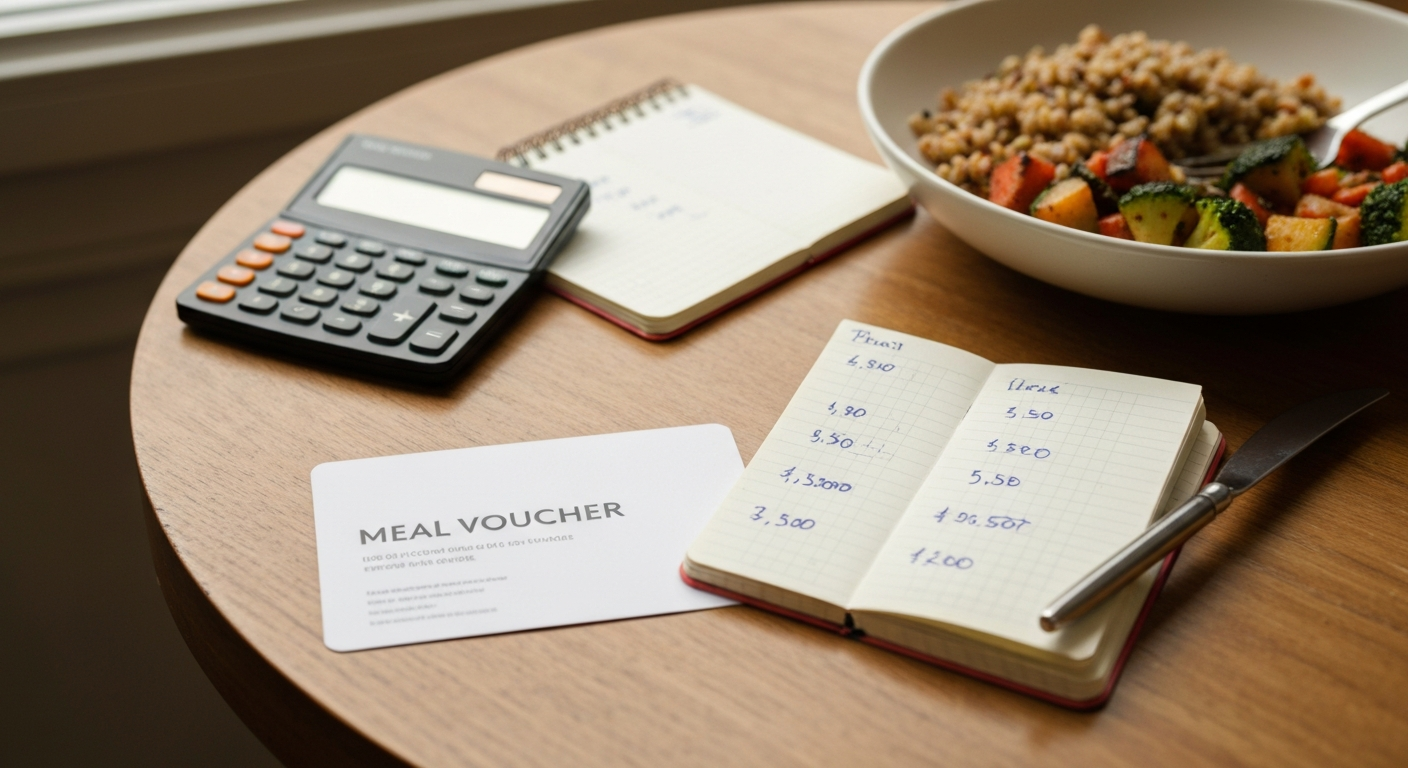
Eight euros per working day is the maximum face value of a Belgian meal voucher, and in Brussels that number meets a city where a decent sit-down lunch near the EU quarter already costs €15 or more. It's small enough to dismiss and big enough that, over a year, it's worth €1,760. The gap between using your vouchers well and using them badly is the difference between a tool that pays for half your food budget and a tool that helps you buy slightly less depressing sandwiches at the Delhaize on your corner. Most people land in the second category by accident. The first is reachable with three or four habits.
What does €8 actually buy in Brussels?
| Scenario | What you get for €8 | Value rating |
|---|
| Supermarket meal-deal sandwich | Sandwich + drink + snack at Delhaize | Acceptable, low ceiling |
| Boulangerie lunch | Quiche + salad + coffee | Good value, varied |
| Casual lunch place in Saint-Gilles | Daily plate (covers most of the cost) | Best variety, slight overflow |
| Office salad chain near the EU quarter | One bowl, no extras | Healthy but tight |
| Saved for a Timesty subscription | €32-40 over 4-5 days covers a weekly box | Highest leverage |
The under-€8 strategy
Most efficient single-day use: spend just under €8 on a real lunch (€7.50 at a boulangerie or quick lunch spot, easy to find in Ixelles under €15) and let the remaining €0.50 accumulate. Five days a week of this, and you've built up €2.50 of savings inside the card. Multiply by 50 working weeks and that's €125 a year you can spend on a single bigger purchase: a serious takeaway dinner, a celebratory restaurant on the Châtelain, a Timesty subscription extension. Most people don't think about the cents because the cents feel small. The cents are €125 a year.
The over-€8 strategy (when it works)
The €8 is a per-day loading limit on face value, not a hard per-transaction wall. Most providers allow a per-day spending cap that's higher than €8 (typically €25 to €70 depending on your card setup), which means a single larger purchase on a Friday using accumulated balance can clear €40 or €50 of vouchers in one go. This is the move for weekly grocery shops at Colruyt or Delhaize, or for subscription payments. Check your card's actual daily cap in the provider app; it's set per employer and per employee profile.
If your provider app shows your daily cap is exactly €8, you have the most restrictive setup. You can request an increase through the app or by emailing HR. Most employers don't object; the restriction is usually a default rather than a policy.
Combining vouchers with a subscription
The most efficient single use of meal vouchers is to pay for a service that supplies multiple days of food at once. A weekly Timesty dinner box at €44 to €80, delivered every Sunday across the 19 communes, maps cleanly onto one to two weeks of accumulated voucher balance, and the cost-per-meal advantage of the subscription compounds with the roughly 87% subsidy of the vouchers. For someone routing their vouchers entirely onto a Timesty subscription, the effective out-of-pocket price per meal drops from €11 to roughly €1.50. That's the strongest version of the €8 rule. One caveat that decides the logistics: it's one payment method per order, so cover the whole box with your voucher balance in a single transaction rather than splitting it. If you're weighing this against cooking from scratch, the real cost breakdown of meal prep vs delivery in Brussels does the sums.
The €8 rule: common questions
Can I spend more than €8 in one transaction?
Sometimes. The €8 is the daily loading limit on face value; the spending cap is set per card by your employer. If your daily cap is at the default €8, no. If it's been raised to €25 or higher (the case for most professionals after a request), a single transaction up to that cap works, drawing on your accumulated balance.
Do unused euros roll over forever?
No. Vouchers expire 12 months from issue. Older balance is spent first (FIFO), so regular users don't lose anything, but if you're saving for a big purchase, plan within the 12-month window. See our guide on whether meal vouchers expire in Belgium for the full mechanics.
Can I use vouchers to pay tips or service charges?
Tips: usually yes if added to the bill via card. Service charges: yes, they count as part of the food transaction. The system isn't fussy about this as long as the merchant is configured for food.
Can I pay a Timesty box entirely with my voucher?
Yes, if your balance covers the order. Timesty accepts Edenred, Monizze and Pluxee, but takes one payment method per order, so you can't top up a short voucher balance with a card in the same checkout. Let a week or two of vouchers accumulate, then pay the box in one go.
The two-minute Brussels routine Every Monday morning, before the first coffee, open your provider app and check the balance and any expiring tranche. Decide where the week's €40 goes: a couple of real lunches in Saint-Gilles, or rolled into Sunday's Timesty box. That single habit is the entire system, and it's the difference between leaving the perk on the table and squeezing every cent of it.
The €8 rule is less about €8 and more about treating the card like an investment account rather than spare change. Two minutes of attention every Monday morning, checking the balance and planning the week's spend, is the entire system. Done consistently, it converts a curiosity into the highest-yield benefit your employer hands you, and in a city as expensive to eat in as Brussels, that yield is real money.
Back to the blog | See this week's menu