How Many Calories Per Meal? A Brussels Guide
By Javier · 2026-02-19 · Health & Nutrition
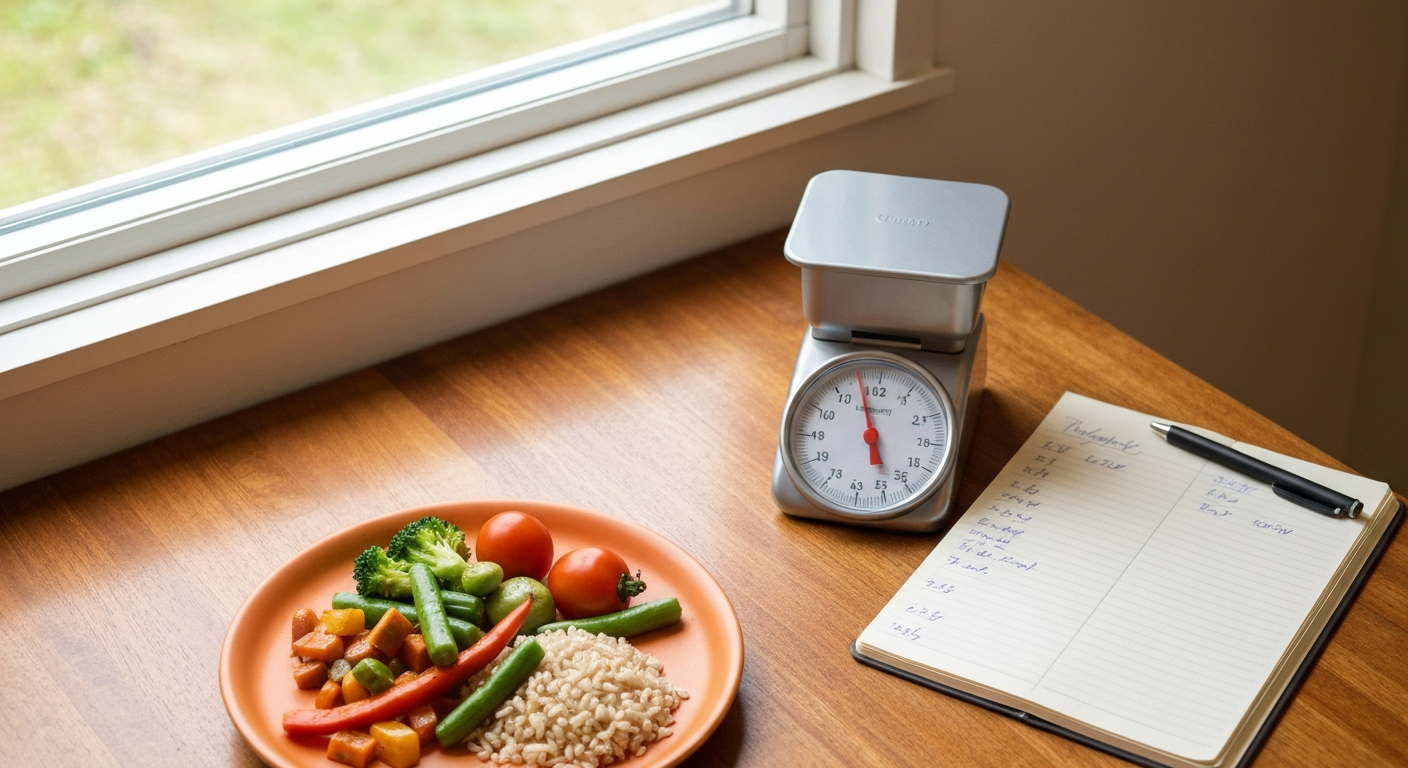
A salad from a Sablon lunch spot can be 800 calories. A mitraillette from a Brussels friterie can clear 1,000 before the sauce. A bowl of pasta the size of your head lands anywhere between 600 and 1,400 depending on what is in it. The question how many calories should one meal have is the wrong question by itself, because the answer depends entirely on you, your goals, and the rest of your day. But the right framework takes about three minutes to apply, and it ends a lot of anxiety.
Start with the daily total, not the meal
Your body burns a certain number of calories every day to keep you alive, plus more for movement and digestion. The sum is called Total Daily Energy Expenditure, or TDEE. For an average 30-year-old office worker in Brussels who exercises twice a week, TDEE typically lands between 1,800 and 2,400 calories. That is the real number you care about. The per-meal number is just that total divided by however many meals you eat. We unpack the full calculation in our TDEE explainer, but the table below is enough to get you oriented.
Per-meal targets at common eating patterns
| Daily target | 3 meals | 3 meals + snack | 4 meals |
|---|
| 1,800 kcal | 600 kcal | 500 + 300 | 450 kcal |
| 2,100 kcal | 700 kcal | 600 + 300 | 525 kcal |
| 2,400 kcal | 800 kcal | 700 + 300 | 600 kcal |
| 2,800 kcal | 933 kcal | 800 + 400 | 700 kcal |
Most adults in Brussels who are not doing intentional weight management land in the 600 to 750 kcal per main meal range, with breakfast often lighter and dinner roughly equal to lunch. That is the realistic answer to how big should a meal be for the average reader of this post: roughly the size of a proper plat du jour in an Ixelles bistro, not the size of a sharing platter.
What a Brussels lunch actually costs you in calories
The midday options around a Brussels office swing wildly, and most people guess wrong. A durum near Place Sainte-Catherine, a baguette américain from the boulangerie, a poke bowl in the EU quarter, a spaghetti bolognese from the canteen: these are not interchangeable. Knowing your per-meal budget turns lunch from a moral question into an arithmetic one, and it makes the meal-voucher decision easier too, since you are paying with Edenred, Monizze or Pluxee anyway up to 8 euro a day.
If you want concrete addresses rather than abstractions, we mapped out where to eat lunch in Ixelles under 15 euros, several of which fit a 600 to 700 kcal target without any willpower at all.
Find your number
The table above uses averages. Your actual TDEE depends on your age, sex, weight, height, and how active you are. Plug your numbers in below.
Why the math actually matters
Once you know your per-meal target, eating well stops being a question of willpower and becomes a question of selection. You are not avoiding food, you are choosing meals that fit a number you already know. A 750 kcal lunch is not healthy or unhealthy in isolation; it is appropriate for someone whose TDEE is 2,250 and who eats three meals, and excessive for someone at 1,800. The same Brussels lunch is two different things for two different people.
Calories aren't everything A 600 kcal meal of grilled chicken, roasted vegetables and rice is not nutritionally equivalent to a 600 kcal gaufre de Liège. Protein, fiber, micronutrients and the time of day all matter. Calories are the budget; macros are how you spend them. Protein is the macro most Brussels desk workers under-hit, which is why we wrote a separate desk-job protein guide. Calories are still the first number to know, because everything else fits inside it.
Our weekly menu at Timesty lists calories and macros for every dish so the math is one less thing to do at the end of a long Brussels workday. If you have found your number above and you are tired of guessing, the menu is sized for adult dinners, typically 550 to 750 kcal, with a few lighter options under 500 for people targeting a deficit. Boxes arrive every Sunday between 14:00 and 18:00, ready to reheat.
Calories per meal: frequently asked questions
How many calories should lunch be for a Brussels office worker?
For most desk workers eating three meals a day, 600 to 750 kcal at lunch is the realistic range. That covers a balanced plat du jour, a generous poke bowl or a sandwich plus soup. Aim lower, around 450 to 500, if you are running a deliberate deficit.
Is 500 calories enough for a dinner?
It can be, depending on your daily total and what else you ate. A 500 kcal dinner suits someone with a TDEE around 1,800 on three meals, or anyone targeting weight loss. For an active person at 2,400 kcal it is on the light side and may leave you hungry by 22:00.
How do I count calories in a restaurant meal in Brussels?
Belgian restaurants rarely print calories, so estimate by structure: a palm of protein is roughly 150 to 250 kcal, a fist of carbs about 200, a thumb of oil or sauce around 100, vegetables almost free. A typical brasserie main lands near 700 to 900 kcal once the frites are involved.
Should breakfast have the same calories as lunch and dinner?
No fixed rule. Many people in Brussels run a lighter breakfast (a tartine and coffee, 250 to 400 kcal) and put more into lunch and dinner. What matters is the daily total, not symmetry. Just make sure the lighter breakfast still carries enough protein, since that is the meal where most people short themselves.
Back to the blog | See this week's menu