Why Our Brussels Meal Boxes Look the Way They Do
By Thomas · 2026-06-19 · Behind the Scenes
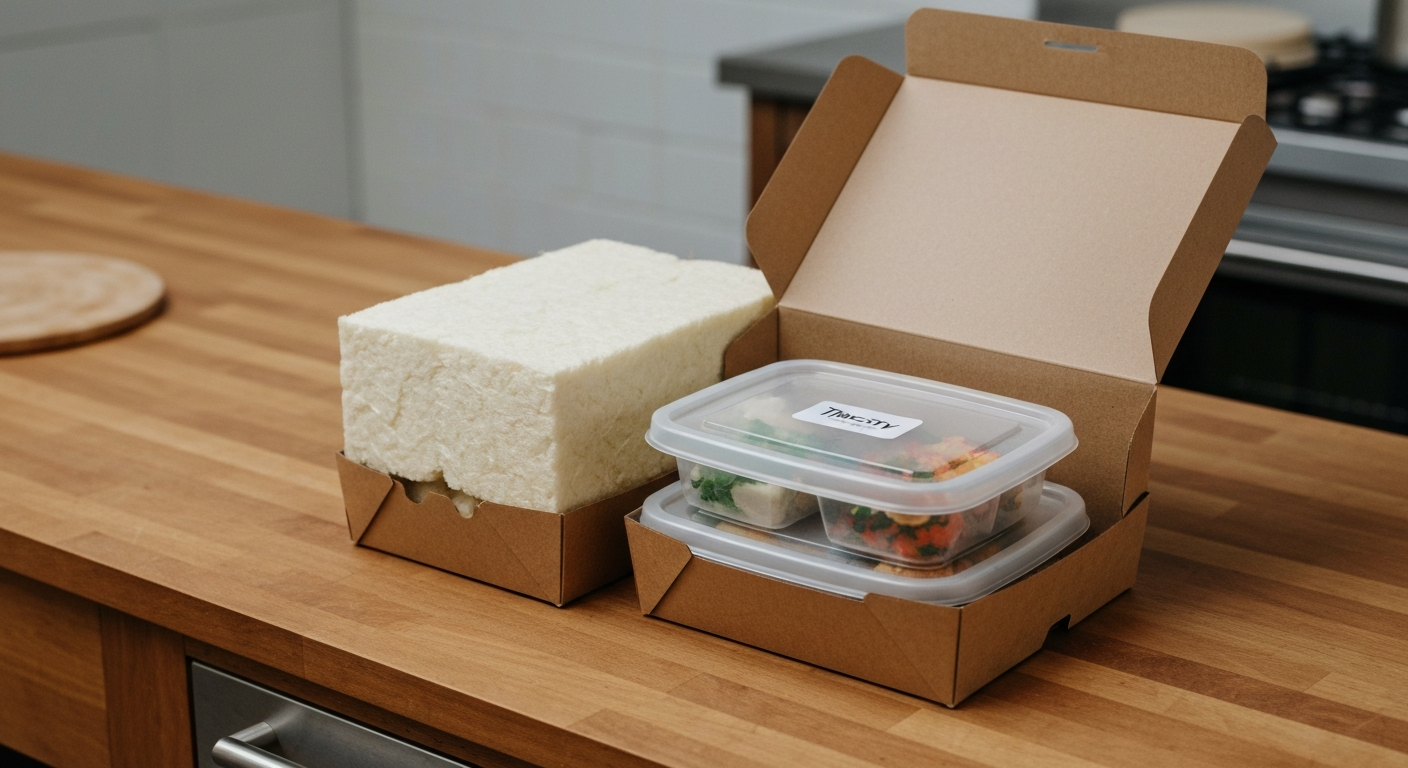
The packaging is the part of the service we agonise over most. It's the first physical thing you touch, it's what defines your impression before the food, and it carries the environmental weight of the whole operation. We've remade it three times since launch in March 2026. Every iteration was a trade-off between five things we wanted simultaneously: keep the food cold, keep the cost low, minimise waste, look like Timesty rather than a generic e-commerce box, and survive last-mile delivery in a city where a van crossing the 19 communes on a Sunday afternoon doesn't always handle boxes gently. The current version isn't perfect. It's the best balance we've found at our current scale.
The five materials in your box
- Outer cardboard box: 100% recycled fibre, single-wall corrugated, locally sourced from a Belgian supplier in Wallonia. We chose recycled over virgin because the lifecycle carbon is roughly 30% lower, and we chose single-wall over double because the temperature differential during a one-hour delivery doesn't require the extra insulation. Recyclable in standard paper recycling streams across Belgium.
- Inner insulation: a recycled-paper wool that looks like sheep's wool but is made from post-consumer paper. We tested four alternatives (cotton, jute, expanded polystyrene, plant fibre) and this one won on the combination of insulation R-value, weight, recyclability and cost. It's compostable. Single-use, but the embedded carbon is roughly an eighth of what an equivalent polystyrene insert would carry.
- Meal containers: PP (polypropylene, recycling code 5) with a paper-based lid film. PP is the standard for microwave-safe food containers; it tolerates 100 °C and doesn't leach into food. We considered glass (rejected: weight in transit and breakage risk), aluminium (rejected: cannot microwave, energy-intensive to produce), and PLA bioplastic (rejected: needs industrial composting that isn't available in Belgium, ends up as contamination in normal recycling). PP recycling rates in Belgium are good but not great; we're tracking a switch to a returnable container model in 2027 if logistics allow.
- Ice packs: gel inserts in reusable polyethylene pouches. These are the one item we'd love you to keep. The full sustainability case for the box only works if the ice pack stays in service for 20+ deliveries, which it will if you put it in your freezer between weeks. Throwing one out costs roughly 8 times the carbon of an equivalent number of single-use chemical ice packs, but reusing one 20 times comes in well below. We're piloting a return-collection scheme in the second half of 2026.
- Sticker labels: paper, removable adhesive, with allergen and reheat info per dish. The label has been the smallest item with the largest design iteration count; we landed on the current FR/NL/EN layout in late April 2026 after three previous versions. Paper rather than vinyl because it goes into paper recycling with the box rather than being a separate flow.
The big trade-off we made The most sustainable option for meal subscriptions is returnable everything: rigid reusable boxes, glass containers, takeback collection on the next week's delivery. The system works at large scale (some Northern European competitors do it). At our scale it would cost 3 to 4 times current packaging per box, and we'd pass it on. We've chosen to optimise for accessibility (a price most people in Brussels can afford) plus single-use materials that are genuinely recyclable, rather than for a returnable model that fewer people would adopt. We may revisit the trade-off in 2027.
Which parts of the box are recyclable in Brussels?
| Component | Material | What to do with it in Brussels |
|---|
| Outer box | 100% recycled cardboard | Flatten, paper recycling (blue bag area / parc à conteneurs) |
| Insulation | Recycled-paper wool | Compost or paper recycling |
| Meal containers | PP (code 5) + paper lid film | Rinse, PMC / blue bag for plastics |
| Ice pack | Gel in reusable pouch | Keep and refreeze: reuse 20+ times |
| Labels | Paper, removable adhesive | Leave on the box, paper recycling |
What we don't do
Three packaging patterns common in the industry that we've chosen not to copy. First, individual plastic wrap around each dish: it solves a leakage problem we solved differently with the lid film, and it adds a non-recyclable layer per meal. Second, branded printed-paper inserts (the «recipe card» pattern from meal kits): the carbon and the disposal load aren't worth the marketing value at our stage, and the dish info is on the container label anyway — and yes, we're a ready-to-reheat service, not a meal kit, so there's no recipe to print. Third, single-use disposable cutlery: we don't include any. The assumption is that you have a fork at home, which has been correct in 100% of cases since launch.
There's no honest version of this story where every choice is perfect. The honest version is that we picked the compromises we could defend and we keep looking for the ones we can't yet.
Thomas, Timesty
If you've kept the ice pack from a previous week and put it back in your freezer between deliveries, you've already done the single biggest thing a customer can do for the sustainability math of the operation. Thank you for that. The box is the last link in a chain that starts days earlier — the cold storage and traceability we run on a Wednesday inside our AFSCA-certified kitchen, and the menu we plan around the Brussels seasons. The whole point of getting the packaging right is so the cost comparison against cooking it all yourself still holds. The rest of the system improves week to week on our side, and we'll write a follow-up post when the returnable-container pilot starts, because that one is the next real step.
Are Timesty meal containers microwave-safe?
Yes. The containers are polypropylene (PP, recycling code 5), the standard for microwave-safe food packaging. They tolerate up to 100 °C and don't leach into food, so you can reheat your meal straight in the container. Remove the paper lid film first.
How do I recycle the Timesty box in Brussels?
Flatten the cardboard and put it with your paper recycling; the paper labels can stay on. The paper-wool insulation goes in compost or paper. Rinse the PP containers and put them with plastics (PMC / blue bag). Keep the ice pack and refreeze it — that single habit does the most for the box's footprint.
Why don't you use fully returnable, reusable packaging?
Returnable everything is the most sustainable model, but at our scale it would cost 3 to 4 times current packaging per box, which we'd have to pass on to you. We chose accessibility plus genuinely recyclable single-use materials over a returnable system fewer people would adopt. We're piloting ice-pack return collection in late 2026 and may revisit returnable containers in 2027.
Does the box include cutlery or a recipe card?
No to both, on purpose. Timesty is ready-to-reheat, not a meal kit, so there's nothing to cook from a recipe card — the allergen and reheat info is on each container's label. We also skip disposable cutlery: we assume you have a fork at home, which has held true in 100% of cases since launch.
Back to the blog | See this week's menu