A Short History of the Belgian Frite (Not French)
By Thomas · 2026-05-26 · Brussels Food Culture
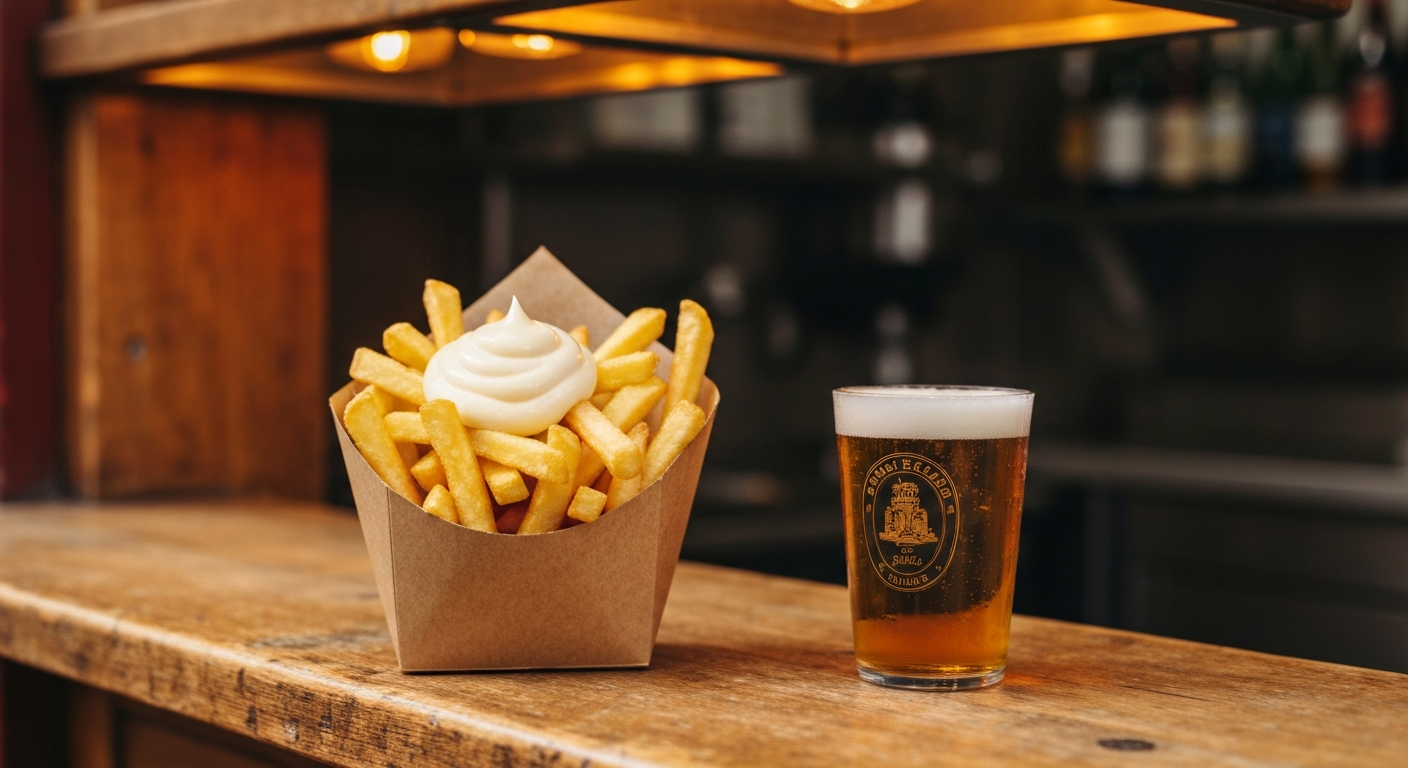
Ask anyone in the world where French fries come from and you'll get a confident answer. Ask in Belgium and you'll get the same confidence, with a different country attached. The Belgian version is correct. The historical record places fried potato strips in the Meuse Valley of southern Belgium by the late 1700s, decades before any French source claims the same thing. The naming confusion is American: GIs stationed in southern Belgium during the First World War heard the locals speaking French and called the local specialty French fries when they got home. The misattribution stuck. The frites are still Belgian, and nowhere makes the case more loudly than a Brussels friterie at 19:00 on a Friday.
A disputed origin (but not actually that disputed)
The leading Belgian account credits villagers in Namur and the Meuse Valley who, during winter when the river froze and they couldn't fish, started cutting potatoes into fish-shaped strips and frying them as a substitute. Earliest reliable written reference: a manuscript from the 1780s. The French claim places the frite on the Pont-Neuf in Paris around 1789, sold by street vendors. The French source is later and less specific. Most historians today, including French historians, side with the Belgian origin. The reason the French claim persists is mostly that France did the cultural marketing, not the inventing.
The UNESCO push Belgium has been pushing for the frituur / friterie culture to be recognized as part of UNESCO's intangible cultural heritage list. As of 2026 the application is still in process at the Belgian federal level before it can be submitted internationally. It would be the first food-service category, not just a recipe, to make the list.
The technique that defines a real frite
A real Belgian frite is fried twice. First at around 150 °C for about six minutes, which cooks the potato through without browning it. The fries are removed, allowed to rest while the oil reheats, then fried again at 175 to 180 °C for two to three minutes, which gives the deep golden color and the crisp shell that separates frites from any other version of fried potato. Traditional friteries use beef fat (blanc de bœuf) rather than vegetable oil because the fat polymerizes differently and produces a texture and flavor that's harder to replicate. Health considerations have moved most modern operations to mixed oils, but a few historic friteries still cook in pure beef fat and you can taste the difference.
| Stage | Temperature | Time | What it does |
|---|
| First fry | ~150 °C | ~6 minutes | Cooks through, no colour |
| Rest | Room temp | Few minutes | Oil reheats, steam escapes |
| Second fry | 175-180 °C | 2-3 minutes | Golden colour, crisp shell |
Three Brussels friteries that get it right
Maison Antoine
Friterie · € · Place Jourdan, 1040 Etterbeek
The institution. Operating on Place Jourdan in Etterbeek, in the heart of the EU quarter, since 1948, two generations in. The fries are textbook double-fried, the queue is part of the experience, and the surrounding cafés famously let you bring your cornet in and order a beer to go with it. If you only do one friterie in Brussels, this is the one.
Fritland
Friterie · € · Rue Henri Maus 49, 1000 Brussels
Closer to the Grand Place, open very late, the right answer when you need frites at 2 in the morning and somewhere to sit down. Quality is solid (not Maison Antoine level, but close), the burger menu deserves attention, the mitraillette (a baguette filled with frites and meat) is the local specialty here.
Frit Flagey
Friterie · € · Place Flagey, 1050 Ixelles
The Ixelles answer. Honest fries, well-fried, on a square that's worth being on. The sauce selection is broader than most (15+ options, the andalouse and the samouraï are the two to know), and they accept Edenred which is unusual for a friterie at this price point.
A frite is two things at the same time: a small joy, and a national argument. Belgians are happy to be on both sides of that.
Thomas, Timesty
The frite rarely travels alone. In a real Brussels brasserie it shows up beside a carbonade flamande, the beer-braised beef stew that is the frite's natural partner, or it stands in for the mash next to a sausage the way a plate of stoemp does. Knowing the frite means knowing the small constellation of dishes around it, and most of that constellation is more Brussels than French.
On mayo, ketchup, and the order of operations
The default Belgian sauce for frites is mayonnaise, not ketchup. The mayo is usually homemade or close to it, slightly looser than the supermarket version, and served either on top of the fries or in a small separate cup. Ketchup exists and nobody will judge you, but you'll be in the minority. The serious sauce list at a real friterie runs to 12 or more options: andalouse (mayo with pepper and tomato), samouraï (mayo with sambal), bicky (mayo with onion and vinegar), cocktail (mayo with ketchup), and the gradient continues from there. Order three sauces and a large cornet and you've just spent €7 on the most Belgian experience available outside a brasserie.
Are fries Belgian or French?
Belgian. The earliest reliable record places fried potato strips in the Meuse Valley of southern Belgium in the 1780s, decades before the French claim of around 1789. The name French fries comes from American soldiers in French-speaking Belgium during the First World War, not from France inventing the dish. Most historians, including French ones, side with the Belgian origin.
Why are real Belgian fries fried twice?
The first fry at around 150 °C for six minutes cooks the potato through without colour. After a rest, the second fry at 175-180 °C for two to three minutes gives the deep golden crust. Doing it in one pass leaves you either raw inside or burnt outside; the double fry is what separates a frite from any other fried potato.
Where can I eat the best frites in Brussels?
Maison Antoine on Place Jourdan in Etterbeek is the consensus institution, open since 1948, with cafés around the square that let you bring your cornet in. Fritland near the Grand Place is the late-night answer (try the mitraillette), and Frit Flagey in Ixelles has the widest sauce list and even takes Edenred.
What is the right sauce for Belgian fries?
Mayonnaise is the default, not ketchup, and it's usually homemade and looser than the supermarket kind. A serious friterie carries 12 or more options: andalouse (mayo with pepper and tomato), samouraï (mayo with sambal), bicky (mayo with onion and vinegar) and cocktail (mayo with ketchup) are the classics to know.
Frites are the one Belgian food we don't put on the Timesty menu. The reason is technical: reheated frites are bad frites. The double-fried texture is gone within twenty minutes of leaving the fryer, which makes it the worst possible candidate for a chef-prepared box delivered across Brussels every Sunday afternoon. We rotate steak-frites adjacent dishes occasionally, with the steak in the box and the recommendation to grab fresh frites from Maison Antoine on the way home. It's the closest the platform gets to refusing to do something.
Back to the blog | See this week's menu