5 High-Protein Lunches From a Timesty Box in Brussels
By Thomas · 2026-06-26 · Recipes
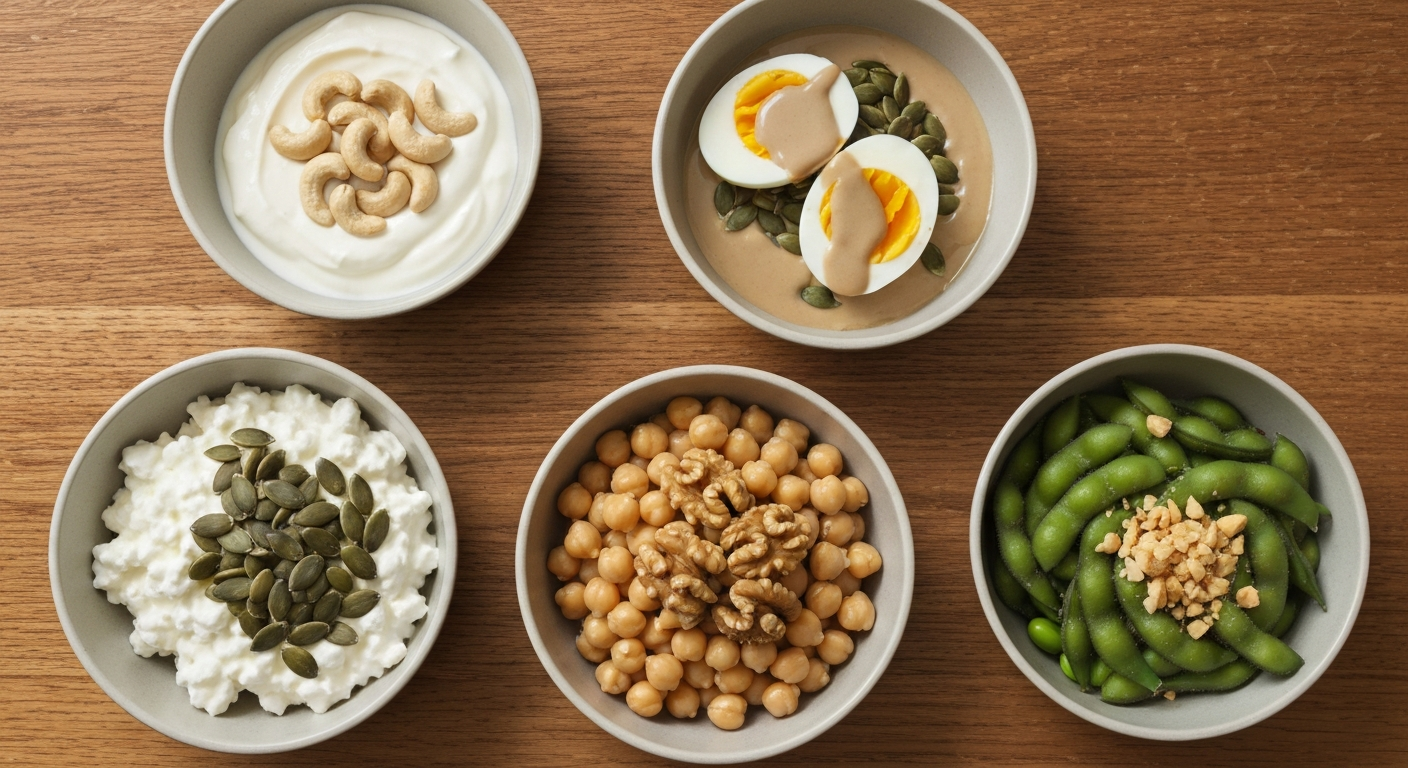
The standard Timesty meal sits between 30 and 35 g of protein, which is the right number for most adults at most meals. But a chef-cooked dinner box reheats just as well at a desk the next day, and plenty of Brussels customers do exactly that, eating last night's box as lunch in an EU-quarter office or a co-working space in Ixelles. If you train seriously (strength work three or four times a week) or you're managing sustained afternoon focus through back-to-back meetings, 40 to 45 g per meal is a better target. The honest way to get there isn't to redesign the meal; it's to add one small high-protein topping and move on. Below are five combinations, each under a minute, each lifting the protein count meaningfully without changing the character of the dish. The recipes use generic descriptions of the base meal because the additions work with any chef-cooked equivalent, not just ours.
Chicken Curry with Yogurt and Cashews (45 g protein)
- 400 g cooked chicken curry with rice (any chef-cooked equivalent)
- 3 tablespoons Greek yogurt (full-fat, 10% protein)
- 20 g unsalted cashews, roughly chopped
- A few cilantro leaves
- Heat the curry per package instructions (microwave 2 minutes or pan 4 minutes on medium).
- Top with the yogurt, scatter cashews, finish with cilantro. Eat hot.
Salmon and Quinoa Bowl with Boiled Egg (50 g protein)
- 400 g cooked salmon with quinoa (any chef-cooked equivalent)
- 1 hard-boiled egg, halved
- 1 tablespoon tahini
- Squeeze of lemon, pinch of salt
- Heat the salmon bowl 2 minutes in the microwave. The egg can be boiled the night before or batch-boiled on Sunday.
- Whisk tahini with the lemon juice and a teaspoon of water to a sauce consistency. Drizzle over the bowl, add the egg halves on top, season.
Beef Stew with Cottage Cheese and Pumpkin Seeds (48 g protein)
- 400 g cooked beef stew with potatoes or polenta (any chef-cooked equivalent)
- 100 g cottage cheese (low-fat or full-fat)
- 1 tablespoon pumpkin seeds
- Fresh parsley, chopped
- Reheat the stew until steaming throughout, 3 minutes microwave or 5 minutes on the stovetop.
- Spoon the cottage cheese alongside the stew rather than on top (it shouldn't melt). Sprinkle pumpkin seeds and parsley over both.
Dahl with Greek Yogurt and Chickpeas (42 g protein)
- 400 g cooked lentil dahl with rice (any chef-cooked equivalent)
- 3 tablespoons Greek yogurt
- 50 g cooked chickpeas (tinned, drained, rinsed)
- 10 g walnuts, broken into pieces
- Heat the dahl 2 minutes microwave. Warm the chickpeas in a small dry pan for 90 seconds while the dahl reheats; this concentrates flavor and gives them texture.
- Top the dahl with yogurt, then the warm chickpeas, then walnuts. The temperature contrast between cold yogurt and hot dahl is the point.
Tofu Stir-Fry with Edamame and Peanuts (38 g protein)
- 400 g cooked tofu stir-fry with rice or noodles (any chef-cooked equivalent)
- 80 g shelled edamame (frozen, thawed)
- 15 g unsalted peanuts, crushed
- 1 teaspoon sesame oil
- Heat the stir-fry 2 minutes microwave. Add the edamame to the bowl for the last 30 seconds (they only need to warm, not cook).
- Drizzle the sesame oil over the bowl, scatter the crushed peanuts, eat immediately.
How much protein do you actually need at a meal?
Before stacking grams, it's worth knowing the target. For a sedentary Brussels desk worker, the daily baseline is around 0.8 g of protein per kilo of bodyweight; people doing regular strength training aim closer to 1.6 g per kilo, spread across the day. That's why 30-35 g suits most meals and 40-45 g suits a training day. We unpack the desk-job side of this in how much protein you actually need, and the calorie context in how many calories one meal should have. The point of the additions below is precision, not maximalism.
Build your own: the protein-booster cheat sheet
| Booster | Typical amount | Protein added | Best on |
|---|
| Greek yogurt (full-fat) | 3 tbsp (~90 g) | ~9 g | Curry, dahl |
| Cottage cheese | 100 g | ~11 g | Stews, traybakes |
| Hard-boiled egg | 1 egg | ~6 g | Grain bowls, salads |
| Chickpeas / edamame | 50-80 g | ~5-9 g | Dahl, stir-fries |
| Nuts / seeds | 10-20 g | ~3-5 g | Almost anything |
The pattern is the same across all five: take a 400 g main with 30 to 35 g of protein, add one dairy-based booster (yogurt, cottage cheese) or one plant-based booster (chickpeas, edamame, tofu cube), then a small nut or seed for crunch and a third source of protein. The math: 30 + 8 to 10 (dairy) + 4 to 6 (nuts/seeds) = 42 to 46 g. It works with any chef-cooked main at the same protein baseline. The reason we wrote it around Timesty boxes is simply that we know the per-meal protein numbers exactly (they're on every dish label), which makes the addition math precise.
Keep three protein boosters as kitchen staples and you cover all five recipes plus most variations: a 500 g tub of Greek yogurt, a 250 g tub of cottage cheese, and a 200 g bag of mixed nuts and seeds. The whole set costs €8 to €10 at any Brussels supermarket and lasts two weeks. The per-meal added cost is roughly €0.80, and the protein delta is meaningful.
If you're looking at a Timesty box and wishing the protein count were a few grams higher, this is the version of upgrade your meal that's actually worth the time. Not a different subscription, not a different cuisine; just sixty seconds of additions that turn a 30 g lunch into a 45 g one. Reheated at your desk in the EU quarter, it's the closest thing to a chef-built high-protein lunch without leaving the building, and a small part of eating well when you work 50 hours a week. That's the post we wanted to close the spring blog cycle with: less ambitious than reinventing the wheel, more useful than another diet article.
How much protein is in a standard Timesty meal?
Most Timesty dishes land between 30 and 35 g of protein per 400 g meal, and the exact figure is printed on each dish label. That covers most adults at most meals. To reach the 40-45 g better suited to a strength-training day, add one quick booster from the cheat sheet above rather than changing the meal itself.
What's the fastest way to add protein to a meal without cooking?
Three tablespoons of full-fat Greek yogurt (around 9 g) or 100 g of cottage cheese (around 11 g) spooned onto a hot dish takes ten seconds and no cooking. A hard-boiled egg batched on Sunday adds about 6 g. Stacking a dairy booster plus a small handful of nuts or seeds reliably lifts a 30 g meal to the mid-40s.
Can I reheat a Timesty dinner box as a desk lunch the next day?
Yes. Timesty is a chef-prepared dinner service, but the boxes are ready to reheat and travel well, so eating last night's box as lunch is common, especially in EU-quarter offices and Brussels co-working spaces. Two minutes in a microwave plus a 60-second protein topping gives you a high-protein lunch without a lunch queue. Keep it refrigerated overnight and reheat until steaming throughout.
Do the high-protein add-ons work for vegetarian meals too?
Yes. The dahl and the tofu stir-fry above are both vegetarian and reach 38-42 g with plant and dairy boosters. Stack Greek yogurt or cottage cheese with chickpeas or edamame, then a few nuts or seeds, and a meatless main clears 40 g comfortably. Edamame is the most efficient single vegetarian topping at roughly 9 g for 80 g.
Back to the blog | See this week's menu